GAMON-Drone
Need help?
We help you find the right solution. We offer support, service, calibration and training for all our products. Contact us for a service agreement!
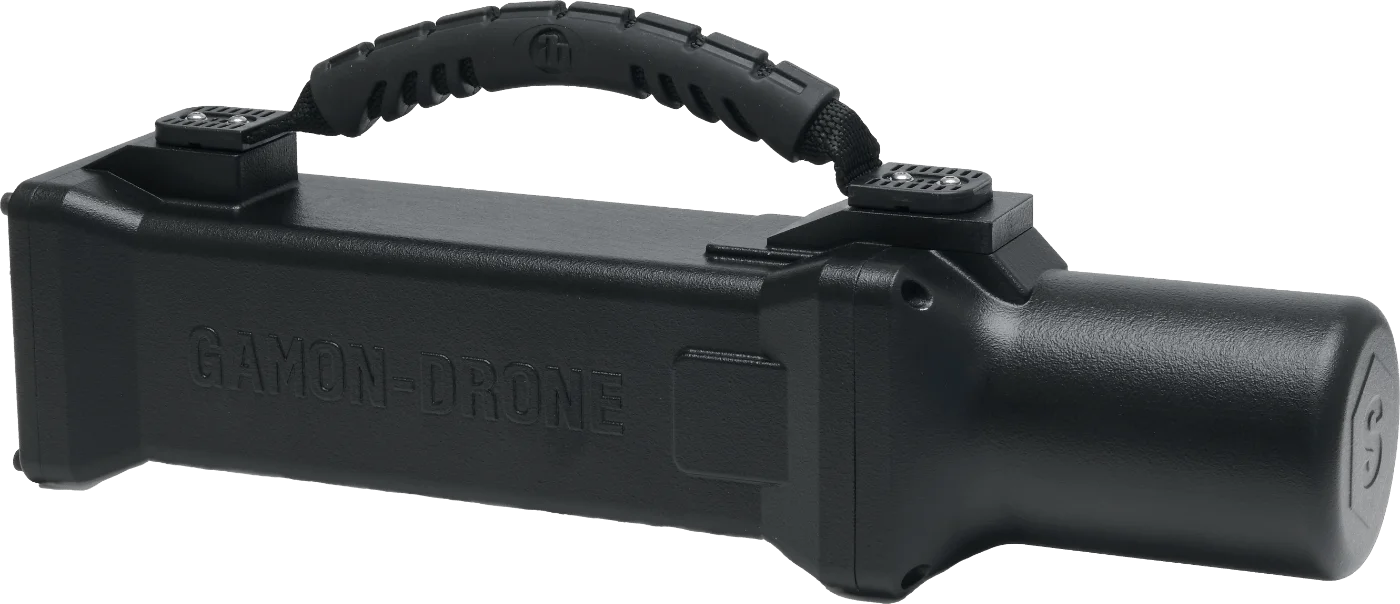
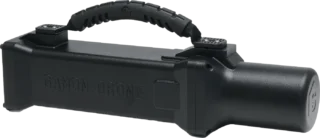
Service & reparation Request a quoteGAMON-Drone is a compact, lightweight gamma spectrometer designed for unmanned aerial vehicles (UAVs) used in environmental radiation monitoring, site remediation, and hazardous area exploration by first responders. Combining low power consumption with high portability, the unit houses both a scintillation detector and digital signal processing electronics in a lightweight enclosure.
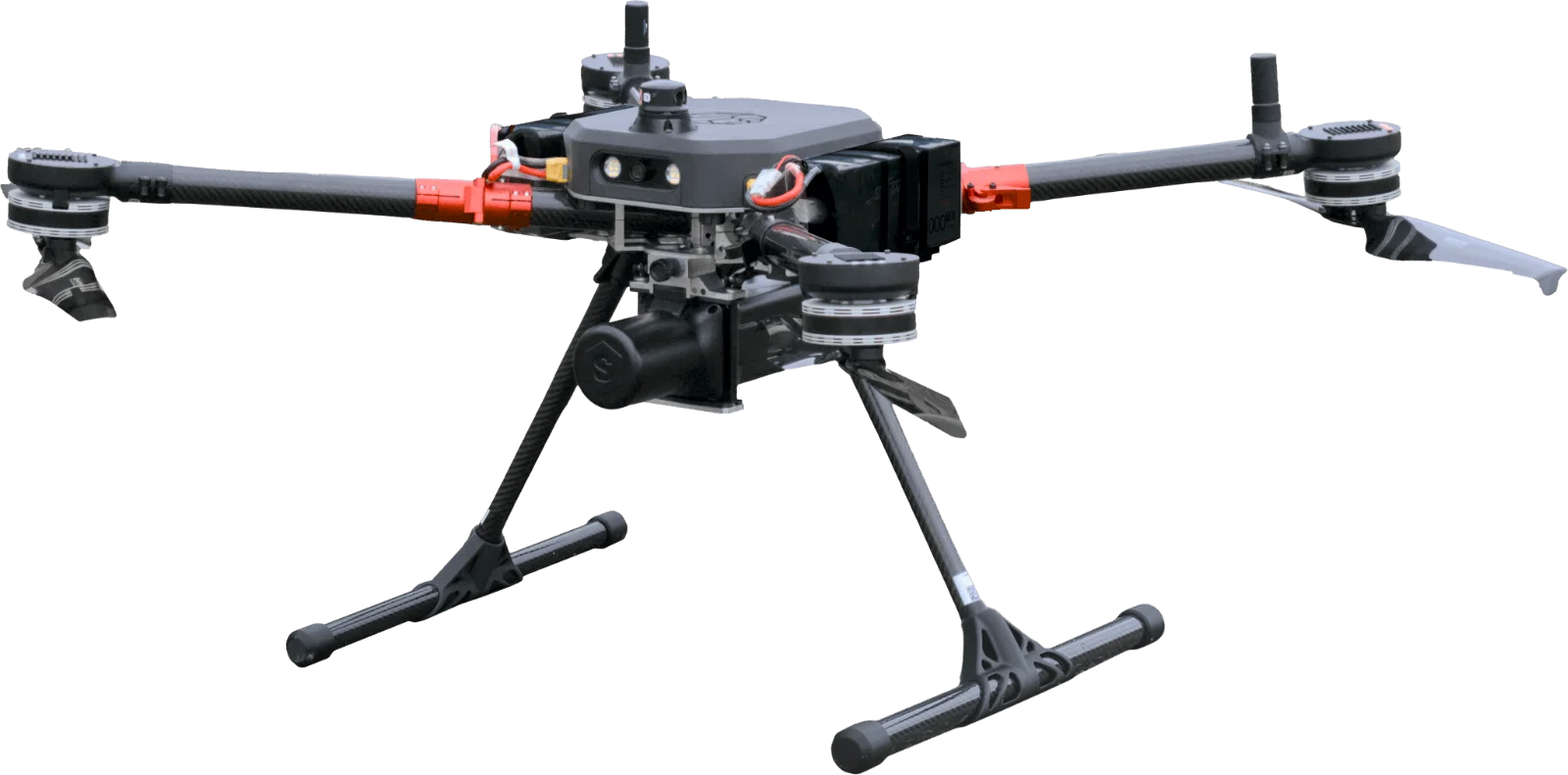
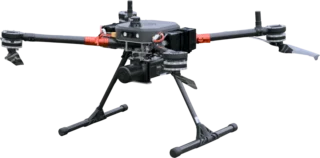
Paired with the Horus-Quad UAV platform, the system transmits real-time, georeferenced radiation data to a ground control station over a 10 km line-of-sight range, offering up to 45 minutes of continuous flight time.
- Radionuclide identification: Automatically identifies multiple gamma-emitting isotopes simultaneously and categorizes them as natural (NORM), medical, or industrial. Includes customizable isotope libraries and programmable dose-rate/isotope alarms.
- Detector and electronics: Configurable with standard inorganic scintillation crystals—such as NaI(Tl) or CeBr3 (with optional LaBr3(Ce) or NaIL for neutron detection). Features a 2048-channel digital MCA, covering an energy range of 30 keV to 3 MeV and measuring dose rates starting from 1 nSv/h.
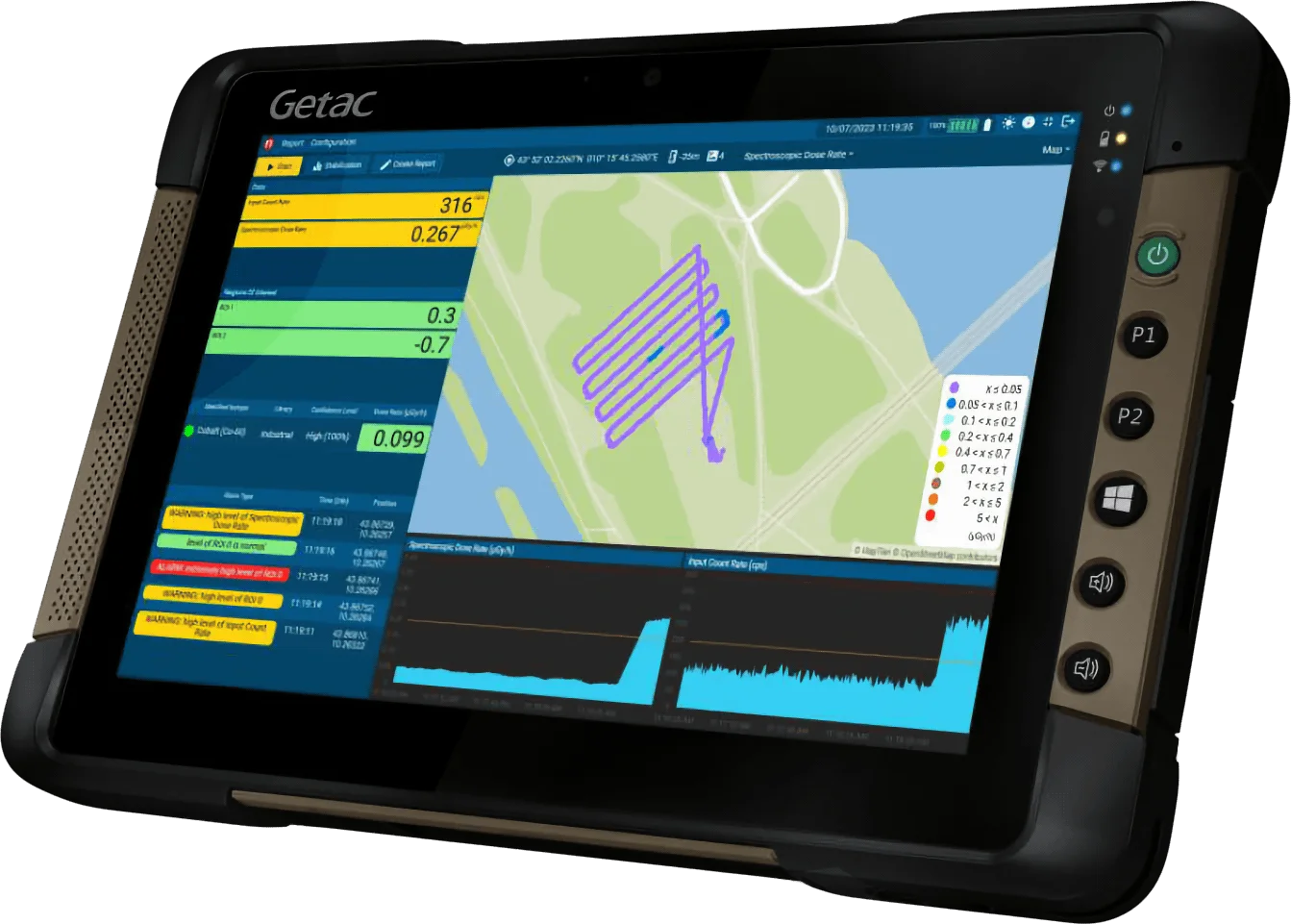
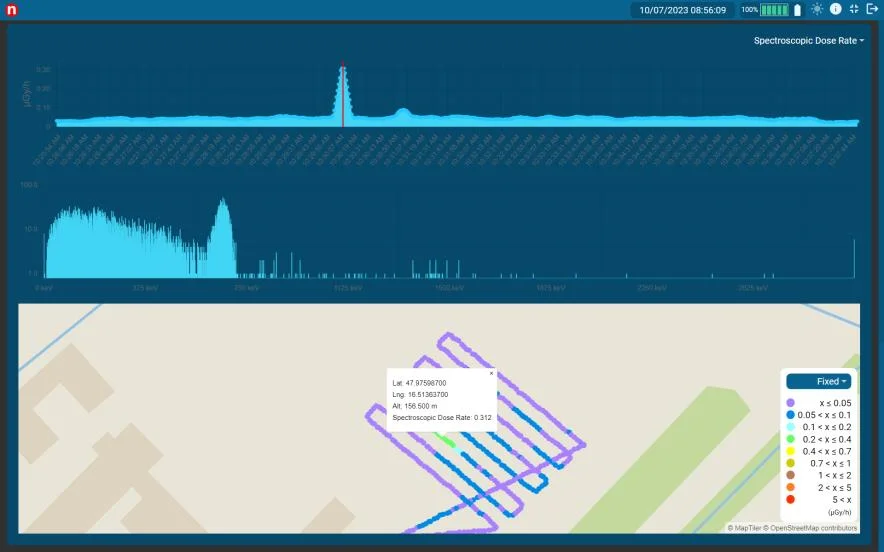
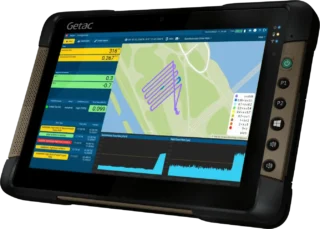
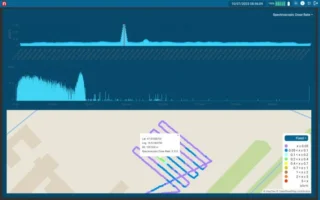
- Ground control and software: Includes a ruggedized, IP65-rated 10.1″ tablet (MIL-STD-810G compliant) running an intuitive web interface for system configuration, live energy spectrum monitoring, and GIS map visualization. Can also operate via wired Ethernet/USB as a standalone portable spectrometer.
- UAV platform: EASA Class C6 certified foldable quadcopter equipped with a 2D Lidar collision avoidance system, automatic return-to-home fail-safe, emergency landing, and an independent Flight Termination System.
Data sheet
Contact
Göran Jonsson
- Sales - Radiation Detection
- Phone: +46 (0)18-566820
- Mobile: +46 (0)70-6220407
- goran.jonsson@gammadata.se

Technical specification
Detector & Spectrometry
- Detector Options: NaI(Tl) (1.5″ x 1.5″ or 2″ x 2″) or CeBr3 (1.5″ x 1.5″, 2″ x 2″, or 3″ x 3″). Optional LaBr3(Ce) or neutron-sensitive NaIL available upon request.
- Energy Range: 30 keV – 3 MeV (detector-specific standard: 40 – 3000 keV)
- Energy Resolution (FWHM @ 662 keV):
- NaI(Tl): 7.0%
- CeBr3: 4.0%
- Dose Rate Measurement Range: Starting from 1 nSv/h
- Signal Processing: 2048-channel digital multichannel analyzer (MCA), 12-bit 62.5 MHz fADC
- Nuclide Identification: Automatic, real-time isotope identification and categorization (natural NORM, medical, industrial), customizable isotope library, and programmable alarm thresholds.
Spectrometer Physical Specifications & Interfaces
- Dimensions (Diameter × Height): 15 cm × 45 cm
- Weight: 2.0 – 2.2 kg
- Operating Temperature: -20 °C to +50 °C
- Power Consumption & Voltage: 5 W (5 – 12 VDC, powered directly by the UAV)
- Communication & Interfaces: Wireless radio link (up to 10 km open line-of-sight range), Wi-Fi, waterproof Ethernet (RJ45) and USB connectors
- Onboard Electronics: Low-power ARM-based CPU (Linux OS), 32 GB internal non-volatile memory, internal temperature sensor for spectrum stabilization, and integrated backup GPS.
Ground Control Station & Software
- Control Unit: Rugged 10.1″ industrial tablet (IP65-rated, MIL-STD-810G drop, shock, and vibration compliant, operating temperature -10 °C to +50 °C)
- User Interface: Web-based control interface, real-time energy spectrum and dose rate display, pre-installed GIS map server, and local database.
UAV Platform (Horus-Quad)
- Certification & Design: EASA Class C6 certified, fully foldable quadcopter
- Flight Time: Up to 45 minutes of continuous operation with payload
- Dimensions & Weight: Empty Operating Weight (EOW, incl. batteries) 10 kg; diagonal wheelbase (with propellers) 1805 mm; height 575 mm
- Batteries & Power: 48 V / 28 Ah LiPo battery pack, max power 7.2 kW
- Safety Features: 2D Lidar collision avoidance system (320° angular range), automatic return-to-home fail-safe, low-voltage emergency landing, and an independent Flight Termination System.